Introduction to Insert Molding
Insert molding is a manufacturing process where pre-made components are inserted into a mold to become integral parts of the final product. This technique involves enclosing the insert with plastic by injecting molten plastic material into a mold cavity where the insert has already been placed. The result is a single piece that combines the strength of the embedded metal, glass or another insert with the versatility and design freedom of the plastic. It’s commonly used in industries that require robust mechanical properties, such as automotive and medical device manufacturing, offering enhanced product functionality and increased structural integrity.
The Insert Molding Process
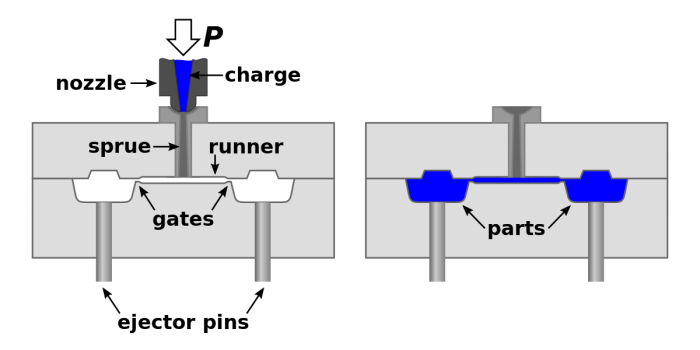
In the realm of insert molding, meticulous preparation sets the stage for a seamless manufacturing cycle. This technique begins with preparing the inserts, which often involves treating metal components to enhance adhesion with the thermoplastic material. Attention then shifts to mold design considerations, where engineers must accommodate the insert’s geometry while ensuring uniform flow of molten plastic around it to prevent defects. During the actual molding cycle, precision is key as the pre-arranged insert is securely positioned within the mold cavity. Following this, there is the injection of plastic; the injection unit propels molten plastic into the mold, encapsulating the insert in its designated place. The process culminates with bonding and curing, whereby the plastic cools, solidifies, and adherently bonds to the insert, thereby forming an integrated assembly that boasts enhanced mechanical properties compared to traditional post-mold assembly.
Materials Used in Insert Molding
In the process of insert molding, various types of inserts such as metals like brass, stainless steel, and aluminum, or non-metals such as ceramics and preformed plastic pieces are commonly utilized. These materials are selected based on their properties to withstand high temperatures and their ability to bond with molten plastic during the molding process. As for the plastics used in insert molding, they must be compatible with the insert material to ensure a strong bond and dimensional stability of the final product. Thermoplastics such as ABS, polyethylene, nylon, and polycarbonate are frequently chosen due to their excellent flow characteristics and adaptability, allowing them to encapsulate the insert effectively without compromising structural integrity.
Advantages of Insert Molding
Insert molding enhances the strength and durability of components by encapsulating inserts with thermoplastic, which increases the structural integrity of the assembly. It also offers a significant reduction in assembly and labor costs because it merges multiple processes into one step, eliminating the need for post-molding assembly operations. Additionally, this method improves component reliability as the integration of parts into a single unit minimizes the risk of part loosening or failure over time. For example, integrating metal screws within a plastic housing during insert molding secures them in place more effectively than screwing them into pre-formed holes.
Applications of Insert Molding in Automotive Manufacturing and Medical Device Construction
Insert molding has become a pivotal process in the automotive industry, where it is used to integrate metal parts with plastic components for enhanced structural integrity. For example, in car manufacturing, insert molding allows for electrical conductors to be embedded within steering wheels, ensuring seamless integration and reducing assembly time. Similarly, medical device manufacturers leverage this technique to encapsulate metallic components into durable plastic housings in devices such as pacemakers. This method not only provides robustness to the apparatus but also ensures patient safety by adhering to stringent hygiene standards.
Comparing Insert Molding to Other Processes
Differences from traditional injection molding are pronounced when examining insert molding, a method where preformed parts (inserts) are placed into the mold before the plastic is injected. Unlike conventional injection molding which molds components purely from thermoplastic material, insert molding typically incorporates metal or different materials into the final product for enhanced structural integrity and function. For instance, it allows for integration of metal screws directly into a plastic part. Choosing insert molding over other methods is advantageous when aiming for reduced assembly and labor costs, improved component reliability through better part strength, and minimized size and weight by eliminating fasteners or connectors. It excels in applications requiring robust mechanical connections between plastic and metal components, such as electrical connectors and medical devices with embedded sensors.
Design Considerations for Insert Molding
When designing components for insert molding, one critical consideration is ensuring proper insert placement within the mold. Precision in positioning the insert is paramount as it affects product functionality and structural integrity. To accommodate this, designers must create features within the mold that will securely hold the insert in place during the injection process. Additionally, accounting for thermal expansion and contraction of both the insert material and the thermoplastic is essential. Materials have different rates of dimensional change with temperature variations, which can lead to stress or warping if not considered. Incorporating tolerances that allow for these changes can help maintain the quality and durability of the final product.
Troubleshooting Common Issues in Insert Molding
During insert molding, misalignment of inserts can lead to part defects and system malfunctions. Precise placement is critical as any deviation from the intended path can cause uneven stress distribution and potential failure points in the final product. To mitigate this issue, manufacturers typically use jigs or fixtures designed specifically for holding inserts in the correct orientation during the injection process. Another pervasive challenge is inadequate bonding, where the insert does not fuse properly with the molten material. This problem often arises due to surface contaminants on the insert or incompatible materials that resist adhesion. Cleaning protocols for inserts and careful selection of thermoplastic materials compatible with the metal or plastic inserts are crucial steps to ensure robust bond formation between components.
Future Trends in Insert Molding Technology
Innovations in materials and processes for insert molding are anticipated to dramatically transform manufacturing efficiencies and product capabilities. The adoption of new high-performance polymers will enable more complex and durable components, meeting the needs of advanced sectors such as aerospace and medical technology. Process advancements, like real-time monitoring and adaptive process control, could refine precision and reduce waste, leading to cost-effective production even for intricate parts. Concurrently, shifts in industry usage may emerge from further integration with automation, likely driving an increase in demand for insert-molded parts within consumer electronics due to their enhanced strength and reduced assembly time.